Health and Safety Consulting
215.496.9237 | colden@colden.com




News & Events
Celebrating 30 Years: The Colden Corporation Journey

For three decades, Colden Corporation has partnered with organizations to deliver practical, innovative health, safety, and environmental solutions. Founded in Philadelphia in 1996 by David de Lalla, Greg Richey, and Chris Wesley, who remain actively involved in the firm today, what began as a small venture has grown into a trusted independent consulting partner supporting U.S. and international clients. Our progress over the past 30 years has been a testament to the hard work of our talented team and the meaningful connections we’ve established with clients across industries and geographies.
News & Events
Clint Smith Named a 2026 STEM Under 40 Honoree
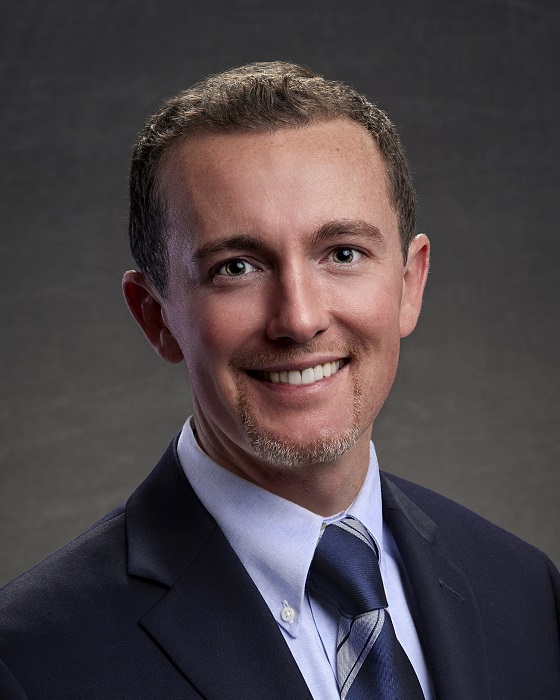
We’re proud to announce that Colden’s Clint Smith, MS, CIH, CSP has been selected as a 2026 STEM Under 40 honoree by the Milton J. Rubenstein Museum of Science & Technology (MOST). The STEM Under 40 Awards recognizes professionals under age 40 whose work and leadership are making an impact across science, technology, engineering, and mathematics in Central New York.
Technical Resource
Colden’s Favorite OSHA Letters of Interpretation (LOI): Who Can Provide Fall Protection Training?
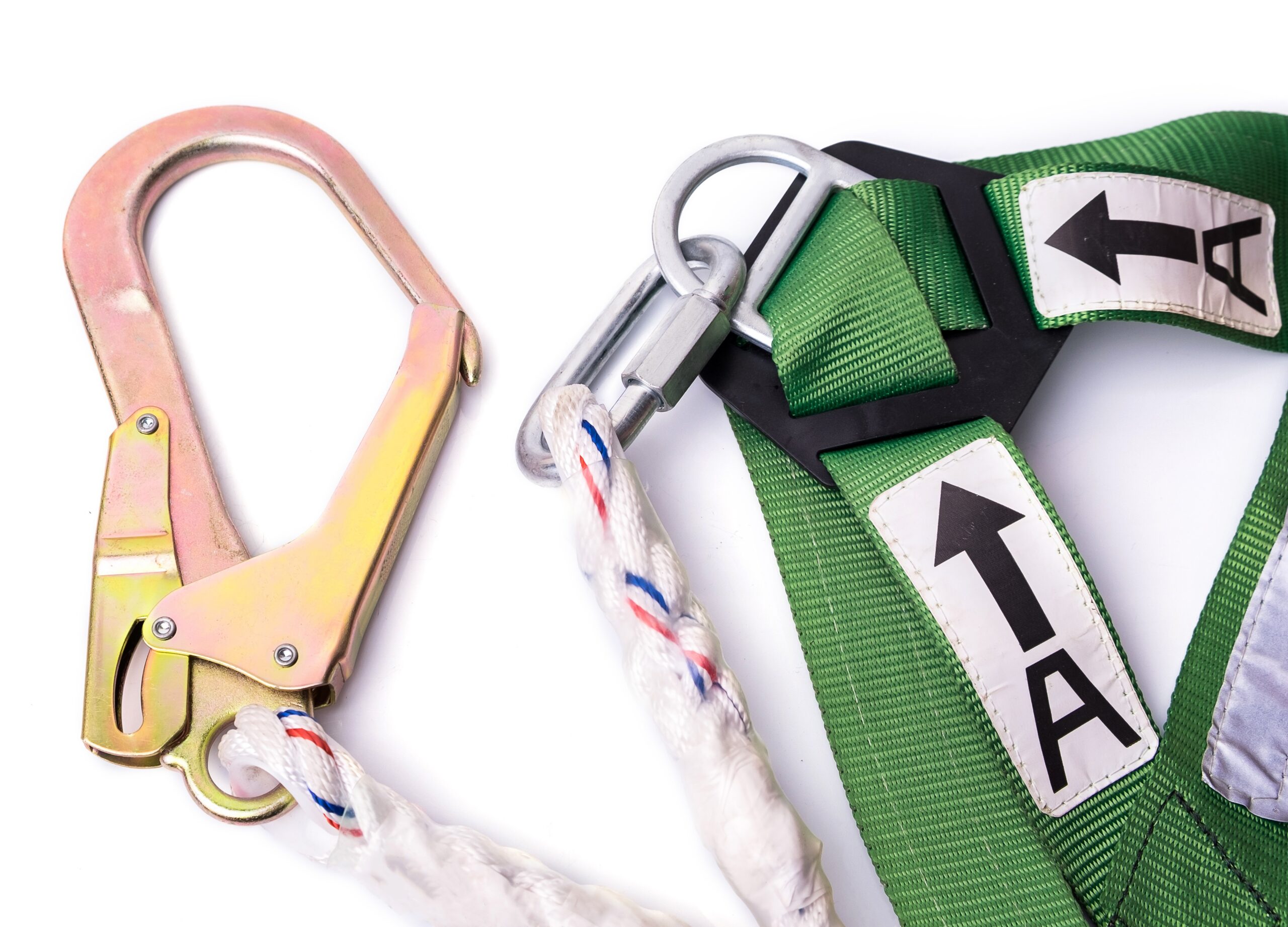
You’ve identified fall hazards at your non-construction site and are ready to develop a fall protection program and train your team. But then the question comes up: who can actually provide that training?
After reviewing the Occupational Safety and Health Administration (OSHA) Walking Working Surfaces standard under 29 CFR 1910 Subpart D, two requirements stand out:
- Employees must be trained before exposure to fall hazards.
- Training must be conducted by a qualified person.
So what does that actually mean in practice? Does a qualified person need a specific certification or degree?
News & Events
Colden to Present at AIHA Deep South September Industrial Hygiene Seminar

Join the AIHA Deep South Section for its annual September Industrial Hygiene Seminar on Friday, September 18, 2026, at the Edward Dufresne Community Center in Luling, Louisiana.
Chrisy Walsh, MS, CIH, CSP will co-present “Rethinking Risk: Applying Statistics to Exposure Data” with Tuan Nguyen, MSPH, CIH, CSP of Shell Americas, exploring practical statistical approaches for interpreting exposure data and supporting risk management decisions.
Shannon R. Magari, ScD, MS, MPH will present “Practical Methods for Investigating and Addressing the Health and Safety Risks of Water Intrusion and Microbial Growth: Analysis of Four Case Studies”, highlighting real-world investigation and response strategies.
Technical Resource
Colden’s Favorite OSHA Letters of Interpretation (LOI): 140 decibels (dB) impact/impulse policy under the noise standard

OSHA’s letter of interpretation (LOI) dated July 30, 2025 answers a question regarding OSHA’s noise standard (29 CFR § 1910.95). Specifically, this letter interprets enforcement of the impact noise level under 1910.95(b)(2). The standard states in a footnote to table G-16 of permissible exposure limits (PELs) that exposures to impulsive or impact noise should not exceed 140 dB peak sound pressure level, indicating an advisory guideline. It does not say must or shall, which indicates a mandatory requirement.
News & Events
Chrisy Walsh Contributes to Newly Released Occupational Safety and Health Handbook
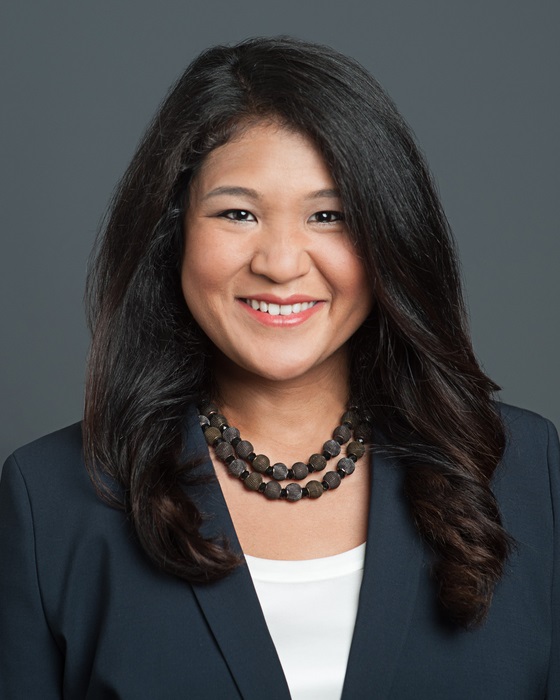
We’re thrilled to share that our own Chrisy Walsh, MS, CIH, CSP, out of our New Orleans Regional Office, is a published contributor in the newly released Handbook of Occupational Safety and Health, Fourth Edition (Wiley), edited by S. Z. Mansdorf.
Chrisy co-authored Chapter 2, “Information Resources for Occupational Safety and Health Professionals,” alongside Leah R. McEwen (Cornell University Library) and Robert F. Herrick (Harvard T.H. Chan School of Public Health, retired).
Technical Resource
Colden’s Favorite OSHA Letters of Interpretation (LOI): Eyewash and Shower Requirements
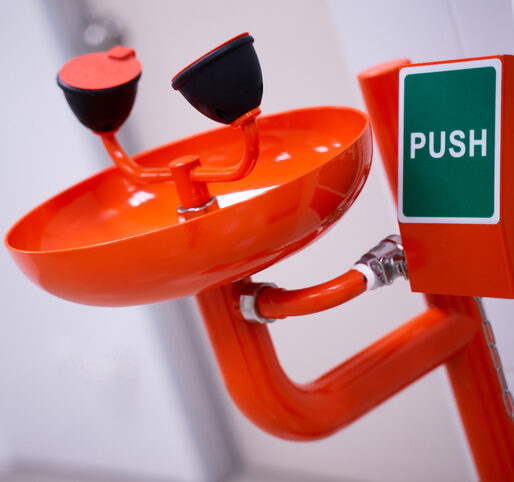
In 2020, exposure to harmful substances or environments accounted for 4,830 cases of eye-related injury or illness cases that resulted in at least one day away from work.
Research estimates that eighty to eighty five percent of our perception, learning, cognition and activities are mediated through vision, (Politzer, 2008). A team of neuroscientists from MIT has found that the human brain can process entire images that the eye sees in as little as 13 milliseconds — the first evidence of such rapid processing speed. (Trafton, 2014). An eye injury can have serious implications for employees including their ability to drive, watch a game, or effectively communicate.